

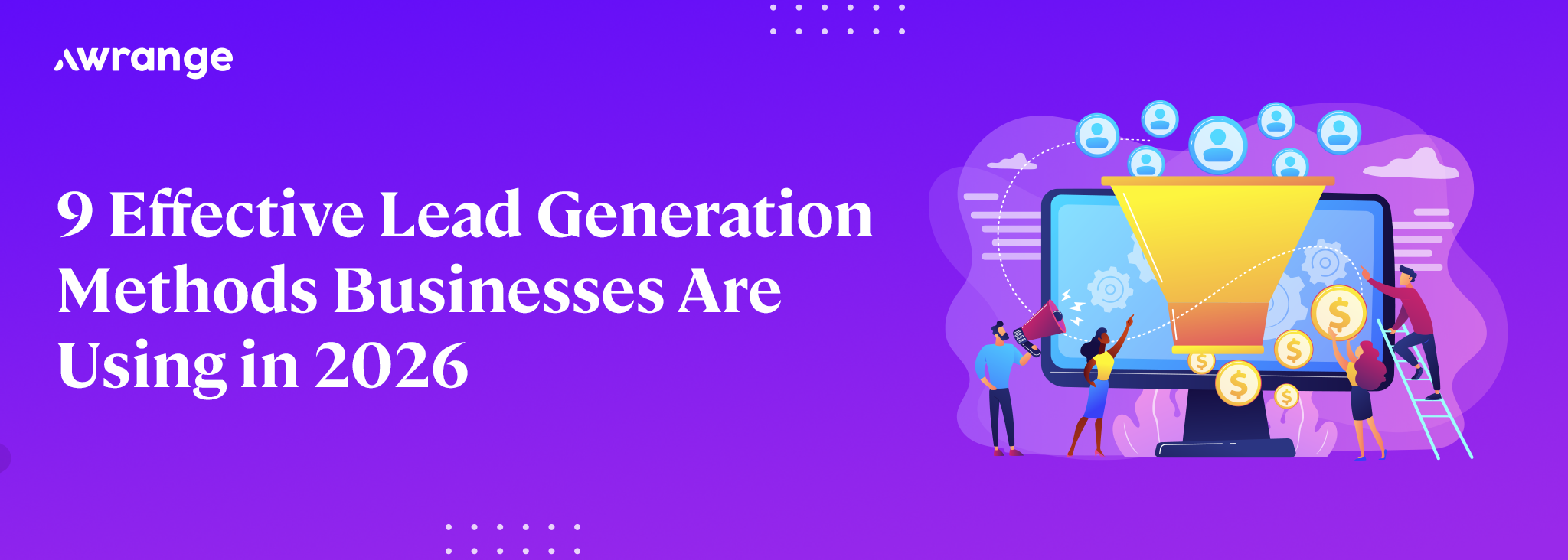
In 2026, generating leads isn’t about reaching more people, it’s about reaching the right people at the right moment.
Rising ad costs, AI-driven competition, and increasingly informed buyers have reshaped how businesses approach growth. Today, success depends on precision targeting, conversion systems, fast response time, and measurable performance.
Here are the most effective lead generation methods businesses are using in 2026 to drive consistent, high-quality results.
1. High-Intent Targeting Over Broad Reach
The biggest shift this year is clear: high intent outperforms high traffic.
Instead of chasing impressions and visibility, businesses are focusing on users who are actively searching, comparing options, or ready to inquire. Keywords with buying intent (“best”, “near me”, “cost”, “get a quote”) consistently outperform broad awareness campaigns.
This approach reduces wasted ad spend and improves lead quality, especially for small and mid-sized businesses working with limited budgets.
2. Paid Advertising Optimized for Lead Quality
Paid advertising remains powerful but only when optimized for conversions, not clicks.
In 2026, top-performing businesses rely on:
- Google Search campaigns to capture active demand
- Meta (Facebook & Instagram) Lead Ads for service inquiries
- LinkedIn Ads for B2B prospect generation
The focus has shifted from traffic volume to cost per qualified lead. Smart campaign structures, accurate tracking, and refined audience targeting now determine success.
3. Performance Marketing for Predictable Growth
Marketing is no longer experimental, it’s measurable.
Businesses increasingly prefer performance-driven strategies that allow them to:
- Track cost per lead accurately
- Optimize campaigns in real time
- Identify high-converting audience segments
- Scale only what delivers consistent ROI
This data-backed approach transforms lead generation from a guessing game into a predictable growth system.
4. Conversion-Focused Landing Pages
Driving traffic is only half the equation. Conversions happen on landing pages.
High-performing pages in 2026 share common traits:
- One clear offer
- Strong value proposition above the fold
- Minimal form fields
- Visible testimonials and trust signals
- Fast loading speed and mobile optimization
Even small improvements in layout and messaging can significantly increase conversion rates without increasing ad budgets.
5. Instant Messaging as a Primary Conversion Channel
Speed has become a competitive advantage.
Businesses that respond within minutes convert significantly more inquiries than those that delay follow-ups. This is why WhatsApp and instant messaging integrations are now central to modern lead generation systems.
Compared to traditional forms, instant messaging offers:
- Faster response cycles
- Higher engagement rates
- Direct, personalized interaction
- Better-qualified prospects
In many industries, messaging platforms now outperform email as the first point of contact.
6. Automation & AI-Driven Follow-Ups
Generating inquiries is only the first step, structured follow-up determines actual conversions.
Automation tools now enable businesses to:
- Send instant responses to new inquiries
- Nurture prospects through structured email or messaging sequences
- Prioritize high-intent leads
- Maintain consistent communication without manual effort
In 2026, automation isn’t optional. It’s essential for maintaining response speed and maximizing marketing efficiency.
7. Multi-Channel Engagement
Modern buyers rarely convert on the first interaction. They research, revisit, and evaluate before making decisions.
Effective strategies now combine:
- Search visibility
- Paid campaigns
- Retargeting ads
- Messaging follow-ups
- Email nurturing
A consistent presence across multiple touchpoints builds credibility and trust, two factors that significantly influence conversion rates.
8. Specialized Expertise Over Fragmented Efforts
Many businesses struggle with poor tracking, low-intent traffic, or inconsistent follow-ups.
Rather than managing disconnected campaigns in-house, more companies now work with focused marketing teams that prioritize measurable performance and structured execution.
The difference isn’t just in strategy, it’s in ongoing optimization and accountability.
9. Data-Driven Optimization
The most successful businesses in 2026 rely on data, not assumptions.
Key metrics that matter include:
- Cost per qualified lead
- Channel-wise conversion rates
- Response time
- Return on ad spend
Continuous analysis and refinement separate average campaigns from scalable growth systems.
What This Means for Businesses in 2026
Lead generation today is no longer about aggressive visibility. It’s about relevance, speed, and precision.
Businesses that prioritize high-intent targeting, conversion optimization, automation, and measurable performance consistently outperform competitors relying on outdated mass marketing tactics.
When executed correctly, lead generation becomes a structured, predictable system not an inconsistent effort dependent on trial and error.
Sustainable growth in 2026 belongs to businesses that treat marketing as a performance engine, not just a promotional activity.
Ready to turn high-intent traffic into consistent leads?
Book a free strategy call and see how a performance-led lead generation system can work for your business.




 Website Development
  Digital Marketing
  Branding & Design
  About Company
  Job Openings